


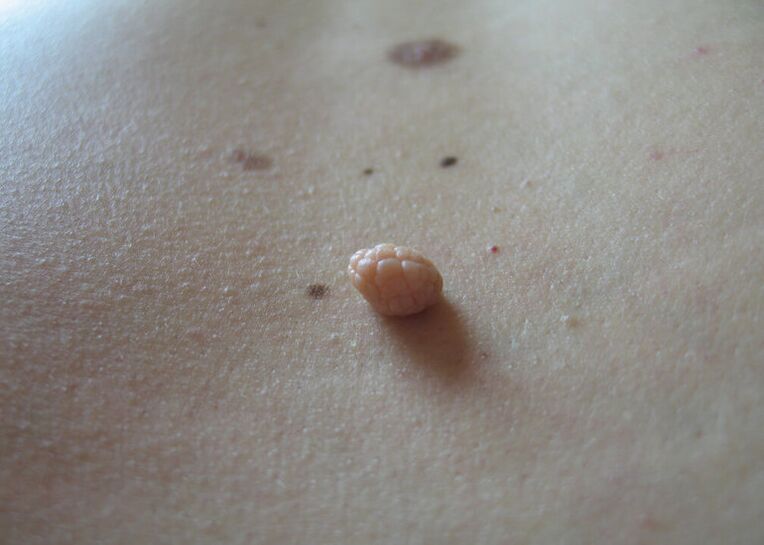
Papillomas are presented in the form of skin growths that arise as a result of abnormal division of the epithelium caused by the papillomavirus.Normally, neoplasms do not cause pain or discomfort.They appear on any part of the body and head, including intimate places, mucous membranes of internal organs.How a papilloma looks on the skin depends on its type: flat, vulgar, simple, plantar.Treatment is prescribed based on the results of the PCR analysis.
Mechanism of disease development
A papilloma is considered a benign tumor that forms on the skin or mucous membrane after HPV (human papilloma virus) enters the body.The external description of growth depends on its type.Dermatologists include the presence of a stalk as a common feature.More often, papillomas have a round or oval shape.Types of tumors by size:
- small;
- average;
- large;
- gigantic.
The texture of the growths is relatively loose and soft.More often, blood vessels are visible on their surface.The general color is flesh-colored or white.Old growths have a dry but dense texture with bubbles.
The types of papillomas on the body differ depending on the type of HPV.The main routes of infection with the virus are sexual, birth and contact.
It is activated in the following cases:
- weakening of the immune system;
- influence of external factors;
- exacerbation of gastrointestinal diseases;
- long-term use of oral contraceptives.
Principles of classification
Papillomas can appear on any part of the body: arms, legs, face, shoulders, back, stomach, genitals.HPV is a microorganism with hundreds of strains that cause various growths on the skin and papillomas.They differ from each other in appearance, growth rate and localization.Taking into account the type of HPV, the treatment method is selected and the risk of tumor degeneration into cancer is assessed.
The main types of papillomas that occur in adults and children:
- simple;
- plantar;
- apartment;
- threadlike.
Simple, vulgar or ordinary growths appear on the body due to HPV 26−29, 41, 63 and 77 strains.These papillomas turn into cancer more often than others.The disease is accompanied by burning and stinging.After a while, the skin becomes rough and the color darkens.
The size of the vulgar growth in the first stage of the disease does not exceed 1 mm, and in the last stage it reaches several centimeters in diameter.More often, such papillomas appear on the fingers and palms.They can develop on the skin of children and adults in the form of one or multiple clusters.
Plantar and flat
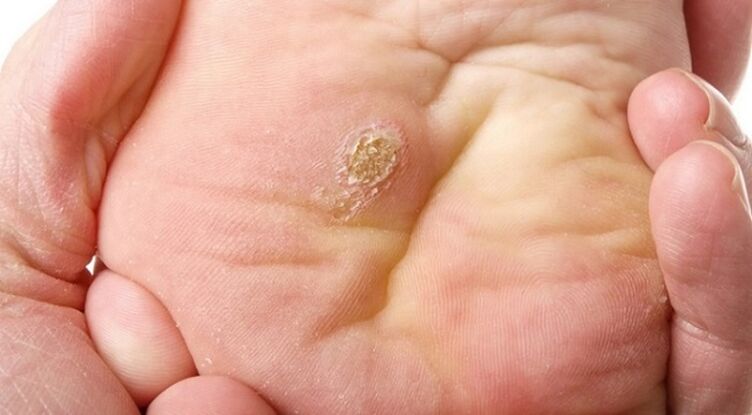
Plantar growths appear on the feet due to HPV types 1, 2 and 4. They are similar to calluses, but do not have a skin pattern.The disease is more often detected in young children.In the first stage after infection, a lump appears, followed by small bubbles that turn into growths.In dermatology, the process is called mosaic papillomatosis.
If formations appear on the skin that slightly protrude above the skin, the diagnosis of flat papillomas is made.They have a round shape.They are most often found on the face, near the lips and on the genitals.In women, the formation can be localized in the cervix.
Virus types 7 and 2 cause the filamentous form of the disease.In this case, the growths have a thin stalk with an elongated or elongated shape.In the first stage, a small lump is diagnosed, which gradually expands.She is prone to injuries.A similar disease is detected in people after 40 years.
Pointed papillomas on the body look like flesh-colored or pink papillary growths.
The pathology develops against the background of those types of HPV that are sexually transmitted.Therefore, they are located in the groin, perineum and anus.The disease progresses rapidly and often recurs.
Warts and papillomas
Against the background of the activation of different types of HPV, 3 different benign neoplasms appear on a person's skin: warts, condylomas of the acuminate type and papillomas.Warts do not have clear boundaries.Their size does not exceed 1 cm in diameter.They appear on exposed parts of the body: fingers, knees.
Papillomas with a soft structure and flat base cause burning and tingling.Soft lumps may appear.Their maximum size is 1.5 cm.The colors are gray, flesh-colored and yellowish.
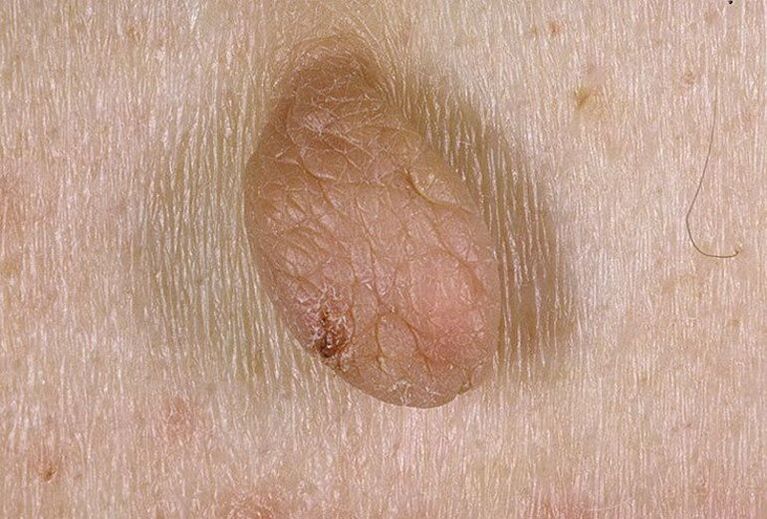
Unlike warts, papillomas grow on closed parts of the body (thighs, mammary glands, underarms).The peculiarity of condylomas is related to their localization - they are mucous membranes.Externally, they are presented in the form of papillary growths, when they merge, a tumor is formed.
Comprehensive diagnostics
If a growth appears, a consultation with a gynecologist, urologist or dermatologist is recommended.After examining the patient, colposcopy, PCR, cytology and other techniques are prescribed.The first technique is performed during the examination of the cervix.For colposcopy, a special device is used to examine the mucous membrane of the reproductive organ.
Other diagnostic methods:
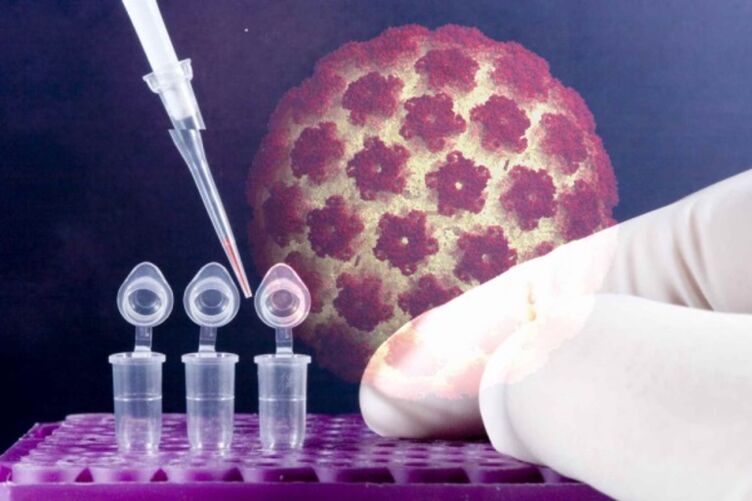
- Cytology.If modified cells are detected in the smear, the doctor confirms HPV.
- Digene test.This precise method reveals the concentration, type and oncogenicity of the virus.The material is obtained by scraping from the mucous membrane of the urethra or vagina.It is carried out in combination with cytology.
- PCR.The material used is mucosal smear, urine and blood.The technique involves identifying the DNA of the virus.
Therapeutic techniques
Surgical removal of papillomas is indicated if they are injured, inflamed or turned into cancer.If the growths are small, complex drug treatment is indicated.Immunostimulants are taken to strengthen the immune system, and antiviral drugs are also taken to destroy HPV.To kill the cells that make up the growths, cytostatics are taken.External therapy can be carried out with special solutions and ointments.The choice of drug depends on the type of HPV identified and the symptoms.
If the size of growths exceeds 1 cm, cancer is suspected and surgical treatment is prescribed.The method of removal depends on the characteristics of the disease.The operation is performed under local anesthesia.The manipulation lasts up to 15 minutes.Other ways to remove growths:
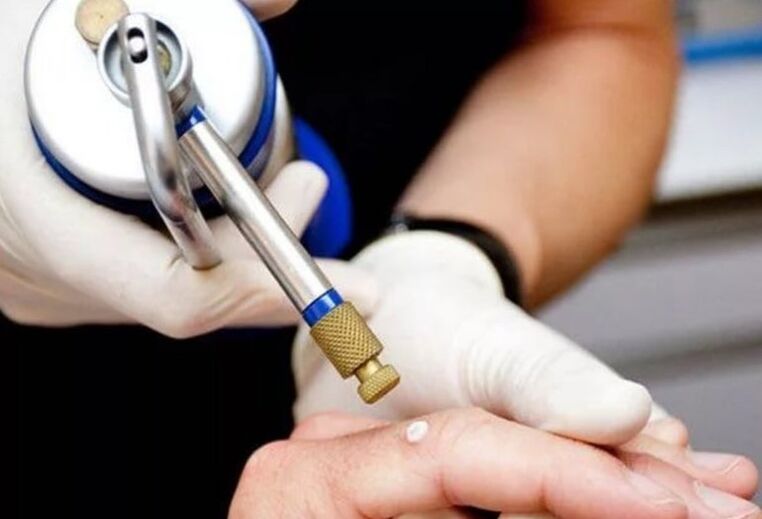
- Cryodestruction with nitrogen.The effect on papillomas lasts up to 20 seconds.After the procedure, the skin turns white and gradually dies.The process is accompanied by stinging and burning.The technique is effective for growths on the eyelids and small joints.Ointments are used to prevent recurrence.
- Laser.The beam affects the problem area for a minute.30 minutes after the first manipulation, the skin becomes red.After a few days, the crust disappears.It will take 2 weeks to heal completely.In order to speed up the healing process, it is recommended to treat the skin with anti-inflammatory ointments.
- Electrocoagulation.Electric current is used to remove the build-up.Manipulation is carried out using a special device.It dries out the growth base.Due to the closing of the vessels with electricity, there is no bleeding.The recovery period lasts 10 days.
Prevention and prognosis
In order to prevent HPV infection, apart from vaccination, it is recommended to have a decent sex life, timely treatment of all diseases and taking vitamin complexes.If you suspect a warteffective anti-virus agents are used.Each type of virus has a different outcome.
A negative prognosis was observed for virus type 18. The disease can last up to five years and then develop into cancer.Metastases spread rapidly throughout the body.The tumor progresses aggressively, growing deep into the genital organs.
HPV type 16 has a favorable prognosis.In this case, there is a possibility of relapse.For types 58−59, the outcome is negative, because 2 years after therapy, the disease recurs and immediately turns into a malignant form.Cancer caused by these HPVs quickly leads to death.